
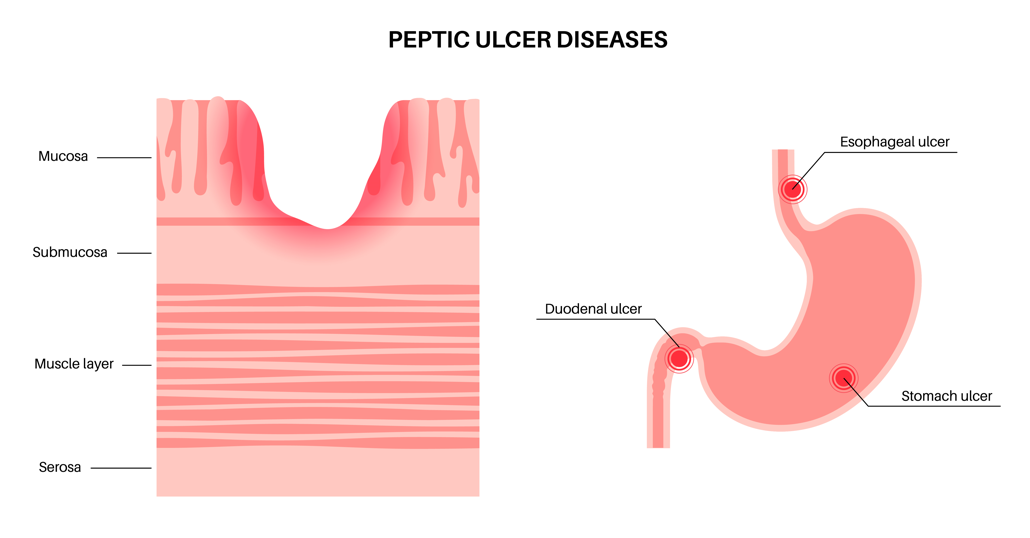
Peptic ulcers are open sores that form on the lining of the stomach or the upper part of the small intestine. These ulcers, also called stomach ulcers, can cause pain and discomfort. Because peptic ulcers are common worldwide, it is important to know their symptoms and how to treat them. Early detection of ulcer symptoms can help prevent serious problems. In this blog, you will learn about peptic ulcers, their causes, diagnosis, peptic ulcer treatment, and ways to prevent them.
What Are Peptic Ulcers?
Peptic ulcers are sores that develop when the protective lining of the stomach or small intestine breaks down. Usually, this lining protects your stomach from strong acids. However, when it is damaged, acid can create painful sores. There are two main types of peptic ulcers:
Most ulcers are caused by an infection or certain medicines. Although anyone can get peptic ulcers, some people are at higher risk.
Common Symptoms of Peptic Ulcers
Peptic ulcer symptoms can vary from person to person. However, some signs are more common. For example, many people feel a burning pain in the upper belly. This pain may come and go. It often gets worse when your stomach is empty. Other symptoms include:
Sometimes, ulcers do not cause any symptoms. Therefore, regular check-ups are important if you have risk factors.
Causes and Risk Factors
Most peptic ulcers are caused by two main factors. First, a bacteria called Helicobacter pylori (H. pylori) can infect the stomach lining. Second, frequent use of nonsteroidal anti-inflammatory drugs (NSAIDs), such as ibuprofen or aspirin, can damage the lining. In addition, other risk factors include:
Although spicy foods and stress do not directly cause ulcers, they can make symptoms worse. According to the World Health Organization (WHO), H. pylori infection is more common in some regions, especially in developing countries.
How Peptic Ulcers Are Diagnosed
If you have ulcer symptoms, your doctor will ask about your medical history and do a physical exam. Next, they may order tests to confirm the diagnosis. Common tests include:
Early diagnosis is important. This helps prevent serious problems like bleeding or a hole in the stomach.
Treatment Options for Peptic Ulcers
Treating peptic ulcers usually involves medicines. The main goals are to heal the ulcer and prevent it from coming back. Treatment options include:
Most people feel better within a few weeks. However, it is important to finish all medicines as prescribed. In rare cases, surgery may be needed for severe ulcers.
Lifestyle Tips and Prevention
While medicines help heal ulcers, healthy habits can prevent them from returning. For example, you can:
In addition, regular check-ups can help catch problems early. If you have a family history of ulcers, talk to your doctor about your risk.
Peptic ulcers are common but treatable. If you notice any symptoms or have concerns, do not wait. Consult Dr. Pulkit Sondhi for expert evaluation and personalised treatment of peptic ulcers. Take the first step toward a healthier digestive system today.